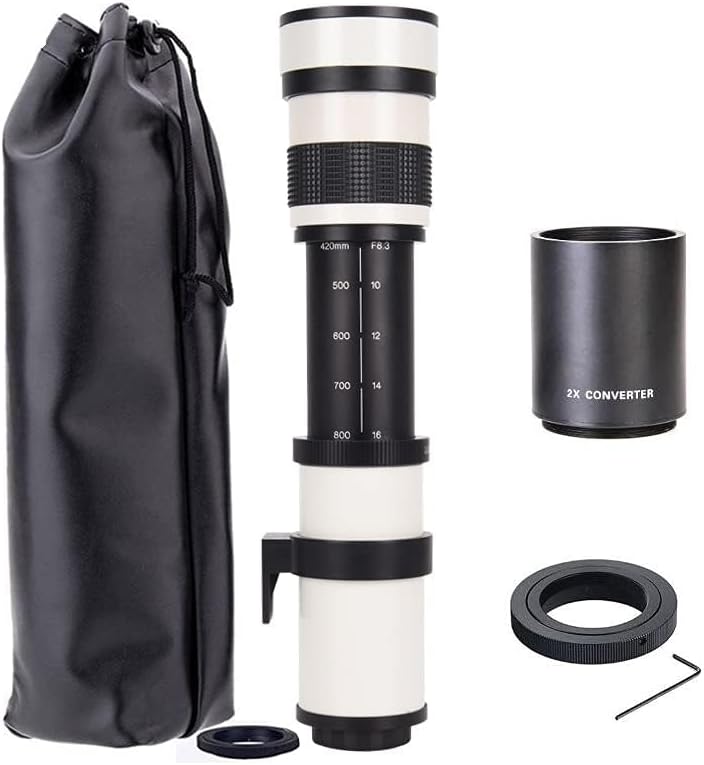
Jintu has carved a niche in the photography world by offering reliable manual telephoto zoom lenses tailored for Canon SLR camera users. Specializing in long-range optics, the brand focuses on delivering value-driven products that extend the capabilities of entry-level to mid-range DSLRs, making distant subjects accessible without breaking the bank.
Brand Overview
Jintu lenses are crafted for photographers seeking extended reach in their shots. With a lineup centered on telephoto zooms, these lenses cater to enthusiasts who want to explore wildlife photography, sports events, or any scenario requiring magnification. The brand emphasizes manual focus designs, which appeal to users comfortable with hands-on control for precise adjustments.
What sets Jintu apart is its commitment to accessible high-magnification optics. These lenses feature versatile zoom ranges, such as 420-800mm and 420-1600mm, allowing shooters to adapt to various distances on the fly. Built with durable construction, they withstand field use while providing clear, detailed images when paired with compatible Canon bodies.
Product Quality and Reputation
Jintu products earn praise for their optical performance relative to their category. The manual telephoto zooms deliver sharp results at longer focal lengths, with multi-coated elements to reduce flare and ghosting in bright conditions. While not competing with premium brands in every spec, Jintu's lenses offer impressive value for hobbyists upgrading from kit lenses.
Users appreciate the T-mount adaptability, ensuring compatibility across a wide array of Canon EOS models like the Rebel series, 5D, 6D, 7D, and more. The reputation for solid build quality means these lenses hold up during extended outdoor sessions, from birdwatching to moon photography.
Who Jintu Lenses Are Best For
These lenses shine for beginner to intermediate photographers transitioning to telephoto work. They're perfect for:
- Wildlife enthusiasts needing reach without heavy gear.
- Sports fans capturing action from the sidelines.
- Astrophotographers targeting celestial objects.
- Budget-conscious creators experimenting with zoom versatility.
If you're using a Canon SLR and want to push creative boundaries affordably, Jintu provides a practical entry point into super-telephoto territory.
Key Product Categories
Jintu's portfolio thrives within specialized photography segments. Explore their offerings in Camera Lenses, where telephoto zooms dominate. For Canon-specific compatibility, check the SLR Camera Lenses category, home to models like the 420-800mm f/8.3 and 420-1600mm f/8.3.
These fit seamlessly into broader paths like Lenses and Camera & Photo sections, allowing easy comparison with other telephoto options. Whether browsing Electronics for upgrades or diving into niche zooms, Jintu stands out for practical, high-reach solutions.
Why Choose Jintu for Your Next Lens
In a market flooded with options, Jintu prioritizes usability and reach. Manual focus encourages skill-building, while the zoom flexibility suits dynamic shooting. Paired with a sturdy tripod, these lenses unlock potential in genres demanding distance, all while maintaining a lightweight profile for portability.
The brand's focus on Canon EF mount ensures plug-and-play setup for most DSLRs, minimizing compatibility headaches. Photographers report satisfaction with the balance of performance and affordability, making Jintu a go-to for expanding kits without premium costs.
FAQ
Are Jintu lenses compatible with all Canon cameras?
Jintu telephoto lenses use T-mount adapters designed for Canon EF mount DSLRs, including popular Rebel, T-series, and 5D/6D/7D models. Always verify your specific camera body for optimal fit.
Do Jintu lenses require manual focus only?
Yes, these are fully manual focus zooms, ideal for users who prefer tactile control. Autofocus is not available, emphasizing creative precision.
What photography styles suit Jintu telephoto lenses?
They're excellent for wildlife, sports, nature, and astrophotography, where long focal lengths capture distant details effectively.
How do Jintu lenses perform in low light?
With f/8.3 apertures, they work best in good lighting or with tripods. Use higher ISO or stabilization for dimmer conditions.
Can Jintu lenses be used on mirrorless cameras?
Primarily for Canon DSLRs; adapters may be needed for mirrorless, but check mount compatibility first.