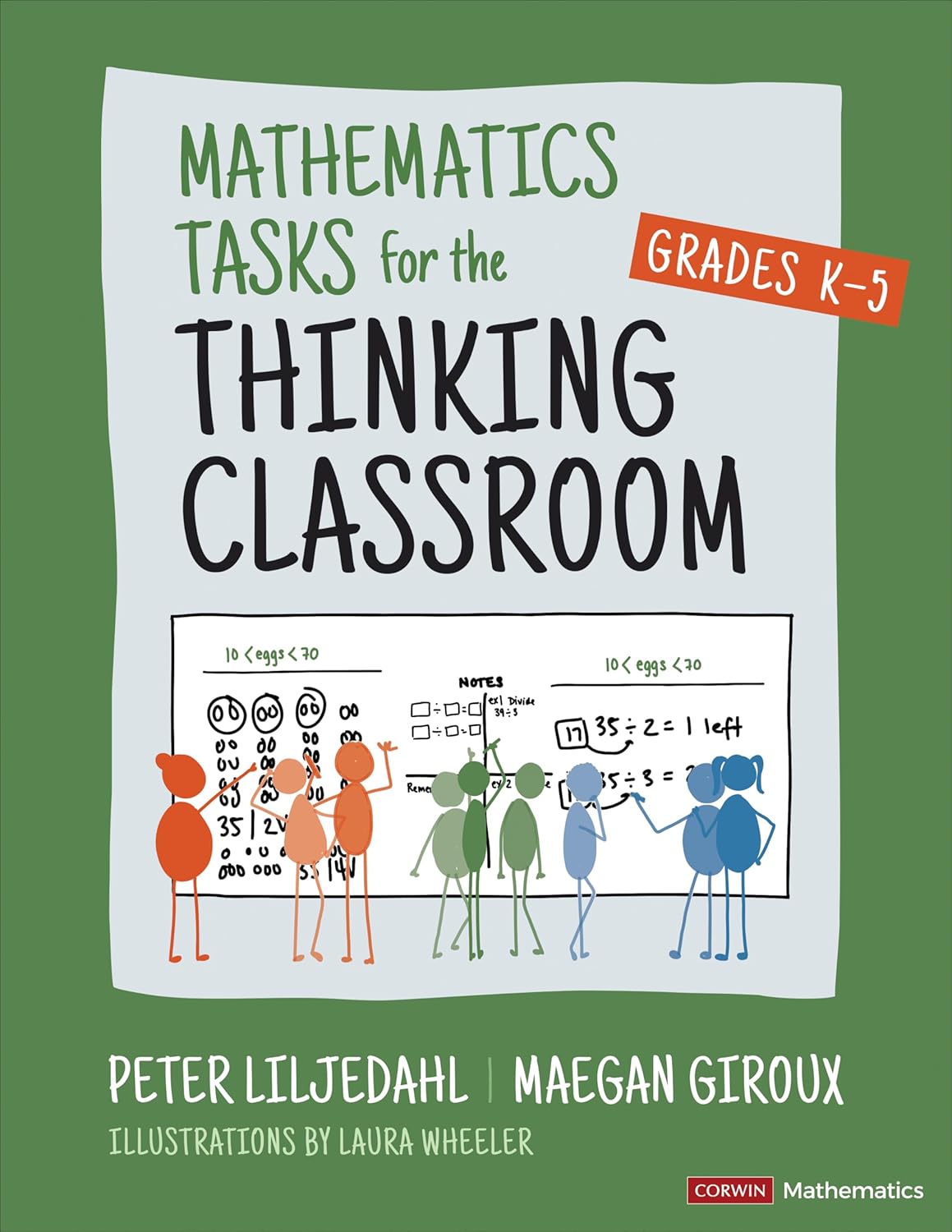
Peter Liljedahl stands as a pivotal figure in modern mathematics education, celebrated for his research-backed strategies that revolutionize how teachers foster critical thinking in classrooms. His publications, primarily in the realm of instruction methods within mathematics, offer practical tools for educators seeking to enhance student engagement and understanding across grades K-12.
Brand Overview
With a focus on transforming traditional teaching paradigms, Peter Liljedahl's work emphasizes active learning environments where students construct knowledge collaboratively. His books draw from extensive classroom research, providing actionable frameworks that shift away from rote memorization toward problem-solving and reasoning. As part of esteemed series like Corwin Mathematics, his contributions resonate deeply within the education and teaching community, making complex mathematical concepts accessible and exciting.
What Makes Peter Liljedahl Stand Out
What truly sets Peter Liljedahl apart is his commitment to evidence-based practices derived from years of observing and experimenting in real classrooms. Unlike generic teaching guides, his methodologies address common pitfalls in math instruction, such as passive note-taking or ineffective group work. By promoting 'thinking classrooms,' he encourages visible thinking, random groupings, and meaningful tasks that build resilience and curiosity in students. This approach not only improves mathematical proficiency but also cultivates lifelong learners, distinguishing his brand in a crowded field of educational resources.
Product Quality and Reputation
Peter Liljedahl's books are meticulously crafted, blending rigorous research with practical application. Each title features clear explanations, real-world examples, and step-by-step implementation guides, ensuring teachers can apply concepts immediately. The reputation of his work is built on its transformative impact, with educators worldwide adopting his 14 teaching practices to revitalize their schools and teaching environments. High-quality production, including diagrams, case studies, and reflective prompts, underscores the premium nature of these resources, making them enduring staples in professional development libraries.
Who Are These Products Best For?
These books are ideal for mathematics teachers at all experience levels, from novices building their instructional toolkit to veterans refining their craft. School administrators and professional learning facilitators also benefit, using them to lead workshops on innovative pedagogy. Parents and homeschoolers interested in supporting math education at home will find value in the accessible strategies. Primarily targeted at K-12 settings, the principles extend to higher education, appealing to anyone passionate about fostering deep mathematical understanding.
Key Product Categories
Peter Liljedahl's portfolio shines brightest in specialized niches of educational publishing. His works primarily fall under:
These categories highlight how his brand bridges theory and practice, offering targeted solutions for math educators navigating curriculum challenges.
One flagship title, Building Thinking Classrooms in Mathematics, Grades K-12: 14 Teaching Practices for Enhancing Learning, exemplifies his expertise. This comprehensive guide outlines 14 research-informed practices, from establishing norms for thinking to designing tasks that provoke curiosity. Teachers report noticeable shifts in student engagement after implementation, with practices like visibly random groupings reducing status issues and boosting participation. The book's structure—progressing from foundational shifts to advanced applications—makes it a roadmap for sustainable change.
Why Choose Peter Liljedahl for Your Teaching Resources?
In an era of standardized testing pressures, Peter Liljedahl's emphasis on equity and deeper learning provides a refreshing counterpoint. His strategies promote inclusive classrooms where every student, regardless of background, can thrive mathematically. The longevity of his ideas stems from their adaptability; practices scale across grade levels and even subjects beyond math. Educators integrating his methods often see compounded benefits, such as improved problem-solving skills and reduced math anxiety over time.
Furthermore, the narrative style of his writing engages readers like a professional development session, complete with anecdotes from diverse classrooms. This human element, paired with data-driven insights, builds trust and inspires action. For districts investing in teacher growth, his books serve as cost-effective catalysts for systemic improvement.
Frequently Asked Questions
What is Peter Liljedahl best known for?
Peter Liljedahl is best known for developing the 'Building Thinking Classrooms' framework, which includes 14 practices to create dynamic, student-centered math learning environments.
Are his books suitable for all grade levels?
Yes, his resources, like those for grades K-12, are designed with scalability in mind, offering adaptations for elementary, middle, and high school settings.
Who should purchase Peter Liljedahl's books?
Mathematics teachers, school leaders, and professional developers seeking innovative, research-based methods to enhance classroom thinking and engagement.
How do his teaching practices differ from traditional methods?
They prioritize active collaboration, visible thinking, and challenging tasks over lectures and worksheets, leading to more authentic mathematical understanding.
Can his strategies be applied outside mathematics?
While math-focused, the core principles of thinking classrooms apply broadly to other subjects emphasizing problem-solving and group dynamics.