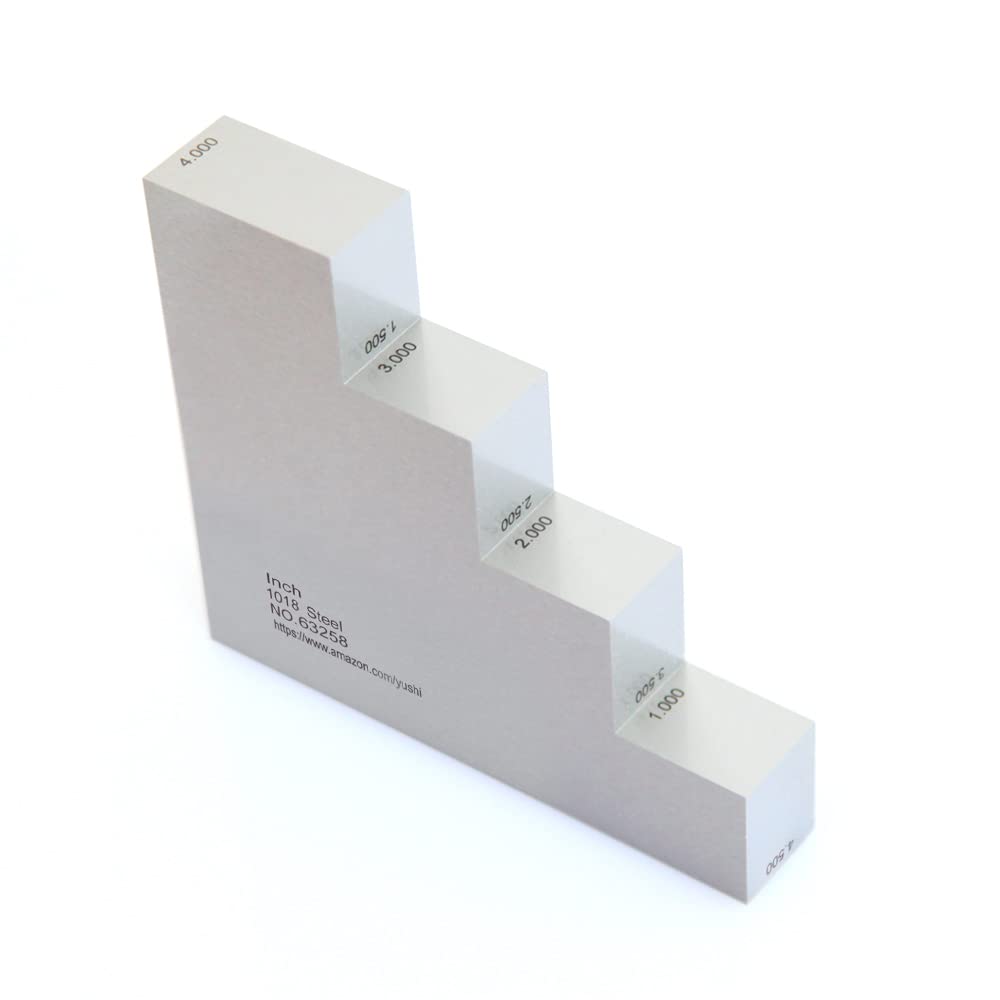
YUSHI stands out in the industrial testing world as a go-to brand for precision calibration tools essential for non-destructive testing (NDT) and ultrasonic testing (UT). Renowned for their durable calibration blocks designed for thickness and linearity verification, YUSHI products help professionals maintain accuracy in demanding environments like manufacturing, aerospace, and quality control labs.
Brand Overview: Precision at Its Core
YUSHI focuses on crafting high-quality test and measurement instruments that meet rigorous industrial standards. Their lineup emphasizes reliability and ease of use, making them a favorite among technicians who require consistent performance in calibration tasks. From step blocks to specialized designs, YUSHI ensures every product supports critical applications in dimensional measurement.
What makes YUSHI products stand out is their construction from robust materials like 1018 carbon steel, which offers excellent durability and resistance to wear. This attention to material quality translates to long-lasting tools that deliver repeatable results, minimizing downtime and enhancing workflow efficiency in testing operations.
Product Quality and Reputation
YUSHI has built a solid reputation for excellence in the field of test, measure, and inspect equipment. Their calibration blocks are engineered for precision, featuring stepped designs that cover a range of thicknesses ideal for verifying ultrasonic gauges and ensuring measurement accuracy. Professionals value YUSHI for the brand's commitment to standards-compliant tools that support compliance in regulated industries.
Whether calibrating for straight-beam or angle-beam testing, YUSHI's offerings provide the stability and flatness needed for dependable readings. This reliability fosters trust among users who rely on these tools for high-stakes inspections where even minor discrepancies can have significant consequences.
Who Benefits Most from YUSHI Products?
YUSHI tools are best suited for NDT technicians, quality assurance engineers, and maintenance professionals in sectors like oil and gas, automotive, and metal fabrication. These users appreciate the brand's focus on practical designs that simplify calibration processes without compromising on precision.
- NDT inspectors verifying ultrasonic thickness gauges
- Calibration labs standardizing measurement equipment
- Industrial facilities conducting routine linearity checks
Key Product Categories
YUSHI excels in specific niches within dimensional measurement and calibration. Explore their contributions to essential categories that power accurate industrial testing.
For precise thickness verification, check out selections in Thickness Gauges, where YUSHI's step blocks shine. In the realm of gage blocks, their precision standards support superior calibration workflows—visit Gage Blocks for more options.
Beyond these, YUSHI supports broader needs in Dimensional Measurement tools and NDT Calibration solutions, offering versatile blocks for various testing scenarios.
Frequently Asked Questions
What materials are used in YUSHI calibration blocks?
YUSHI calibration blocks are typically made from 1018 carbon steel, chosen for its strength, machinability, and stability, ensuring reliable performance in ultrasonic and NDT applications.
What types of calibration do YUSHI blocks support?
These blocks are designed for thickness and linearity calibration in UT and NDT, featuring multi-step designs that cover common measurement ranges for accurate gauge verification.
Are YUSHI products suitable for professional industrial use?
Yes, YUSHI tools are built for demanding professional environments, providing the precision and durability needed by NDT technicians and calibration experts.
How do YUSHI blocks aid in ultrasonic testing?
They offer standardized steps for calibrating UT equipment, helping users achieve consistent velocity and resolution settings for reliable flaw detection and thickness assessments.
Can YUSHI blocks be used for both basic and advanced testing?
Absolutely, with options like 4-step and tipsy step blocks, they accommodate a wide range of testing needs from routine checks to complex linearity evaluations.